In one week, front doors will be decorated with carved pumpkins, children will ring doorbells in costumes, and supermarkets will run out of mini chocolate bars. Halloween has become one of the most widely celebrated festivals of the autumn, far beyond the English-speaking world. Yet behind the plastic skeletons and glowing lanterns lies a story that is more than two thousand years old and surprisingly gentle at its heart.
Where does Halloween really come from?
Most historians trace Halloween back to Samhain, a festival celebrated by Celtic peoples in what is now Ireland, Scotland and parts of Britain and France. Samhain marked the end of the harvest and the beginning of the darker half of the year. It was a time to bring the herds in from summer pastures, to store food for winter and to gather around large communal fires. People believed that on this night the boundary between the world of the living and the world of spirits became thin, so that ancestors and otherworldly beings could pass more easily between them.
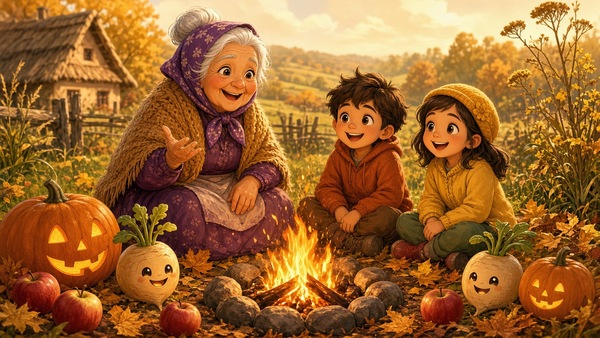
Many customs grew from that idea. Fires offered warmth and protection. Some people wore disguises so that wandering spirits would not recognise them, while others left out food to keep visitors from the other side in a good mood. Seen this way, the festival was less about fear and more about respect, community and preparing together for a long winter.
From All Hallows to Halloween
When Christianity spread across Europe, the church placed All Saints’ Day, also called All Hallows, on 1 November, followed by All Souls’ Day on 2 November. The evening before All Hallows became known as All Hallows’ Eve, which over time was shortened to Halloween. Old harvest traditions mixed with new religious ones. In parts of Britain, people went from house to house “souling”, offering prayers for the dead in exchange for small cakes, an early relative of trick-or-treating.
Why pumpkins, and why turnips first?
The carved lantern has its own legend: the tale of Stingy Jack, a clever trickster who outwitted the devil and was left to wander the night with only a glowing coal inside a hollowed-out turnip. In Ireland and Scotland, people carved faces into turnips and other root vegetables to light their way and ward off mischief. When Irish and Scottish emigrants arrived in North America in the nineteenth century, they discovered that pumpkins were larger, softer and far easier to carve. The jack-o’-lantern as we know it was born.
A festival that keeps changing
In the twentieth century, Halloween in the United States became a community celebration for children, with costumes, parties and organised trick-or-treating. Films, television and global retail later carried those customs back across the Atlantic and around the world. Today, many countries blend Halloween with their own autumn traditions, from harvest festivals to remembrance days for loved ones.
So when you carve your pumpkin this year, you are taking part in a very old human ritual: lighting a small fire against the dark, gathering with neighbours and telling stories as the nights grow longer. That is a tradition well worth keeping alive.