This weekend brings one of Europe’s quietest holidays. All Saints’ Day falls on Sunday, 1 November, followed by All Souls’ Day on Monday, 2 November. While Halloween on Saturday night will be loud, bright and full of costumes, the two days that follow invite a very different mood: calm, candlelit and reflective.
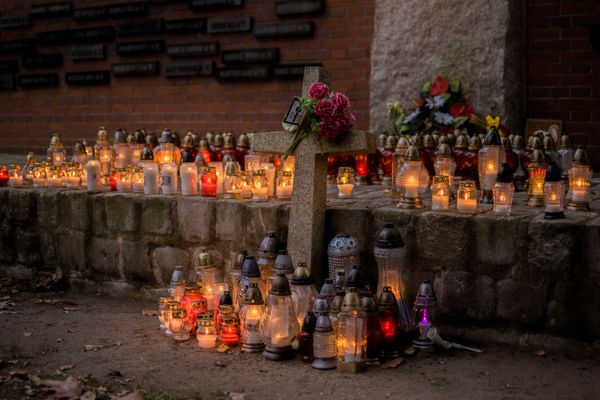
For many families in Poland, Austria, southern Germany, Italy, Spain, France and beyond, early November is the time to visit cemeteries, tidy the graves of loved ones and light a small candle. In the evening, whole hillsides of graveyards glow with thousands of little flames. Even people who rarely think about religion often keep the tradition, simply because it feels good to remember.
Where does the tradition come from?
The church has honoured all saints together since the early Middle Ages, and the date of 1 November became fixed in the eighth and ninth centuries. All Souls’ Day, dedicated to everyone who has died rather than only to saints, was added around the year 1000 and spread quickly through European monasteries. Over the centuries the two days blended into one long weekend of remembrance, and in many regions the visit to the cemetery now happens on the first of November simply because it is a public holiday.
Interestingly, the word Halloween itself comes from “All Hallows’ Eve”, the evening before All Saints. So the costumes and pumpkins of 31 October and the quiet candles of 1 November are, in a way, two sides of the same old calendar.
A public holiday in some places, a normal day in others
Whether you get a day off depends on where you live. In Germany, All Saints’ Day is a public holiday in Baden-Württemberg, Bavaria, North Rhine-Westphalia, Rhineland-Palatinate and Saarland, but not in the north and east. Austria, Belgium, France, Italy, Spain, Poland, Croatia, Slovenia and Hungary also mark it as a holiday. This year, because the day falls on a Sunday, most people will not notice an extra free day, but in some regions so-called “quiet day” rules still apply, which can limit loud events and dance parties.
Small ways to take part
You do not need to be religious to enjoy the gentle spirit of these days. A few simple ideas:
- Light a candle at home. Put a photo of a grandparent or old friend next to it and share a story about them over dinner.
- Visit a cemetery in the evening. Many old graveyards are beautiful and peaceful on 1 November, and walking among the candles is a moving experience.
- Bring autumn flowers. Chrysanthemums, heather and small evergreen arrangements are classic choices because they cope well with frost.
- Call someone. Remembrance is not only about the past; it is also a good moment to reach out to the people who are still here.
If you buy grave candles, choose ones with a lid and a sturdy holder, and never leave open flames near dry leaves. Reusable LED candles are a practical alternative and produce much less waste than the plastic versions.
After a week of pumpkins and party games, All Saints’ weekend is a welcome pause. Take an hour, light a candle, and think of someone who made your life a little better. It is one of the oldest and simplest traditions in Europe, and it still works.