
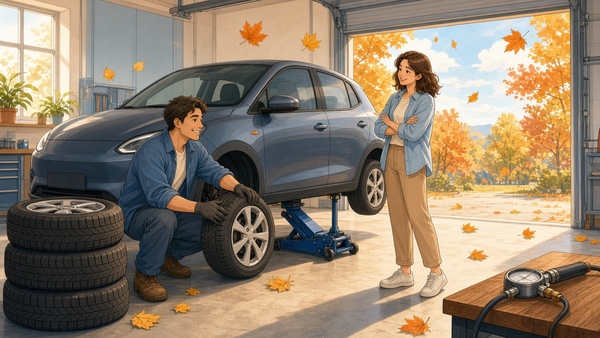
The first frosty mornings of October have a way of sneaking up on drivers. One week the car feels perfectly normal; the next, the dashboard warns about tyre pressure, the windscreen takes ages to clear and an electric car shows noticeably less range than it did in August. None of this is a reason to panic, but it is a good signal to give your car a short autumn check before the colder months settle in.
Many workshops are already booking out their tyre-change slots for late October and November. Getting ahead of that queue is the simplest win of the season: you pick a convenient time, you avoid the first icy morning surprise, and you often get a calmer, more thorough service because the mechanics are not yet rushing.
Why does cold weather change how your car behaves?
Rubber and batteries both react to temperature. Summer tyres use a compound that grips well on warm asphalt but gradually hardens once temperatures stay below roughly seven degrees Celsius, which means longer braking distances on cold, damp roads. Winter and good all-season tyres stay softer and have more sipes, the tiny cuts in the tread that bite into slush and wet leaves.
Air pressure drops as well. As a rough rule, every ten degrees of cooling costs a tyre around 0.1 bar, so the pressure you set on a warm September afternoon may be too low by mid-October. Under-inflated tyres wear unevenly, raise fuel or electricity consumption and make steering feel vague.
For electric and hybrid cars, the battery is the other big factor. Lithium-ion cells prefer mild temperatures, and the car spends extra energy heating both the cabin and the pack. A winter range drop of ten to thirty percent is normal and not a sign that anything is broken.
A quick autumn checklist:
- Tread depth: the legal minimum is low, but for winter driving many experts recommend at least four millimetres.
- Tyre age: look for the four-digit date code on the sidewall; rubber older than about six to eight years loses grip even with plenty of tread.
- Pressure: check it cold, first thing in the morning, and use the values printed inside the driver’s door or fuel flap.
- Wipers and washer fluid: swap streaky blades and top up with a frost-proof mix before the first freeze.
- Lights: shorter days mean more driving in the dark, so walk around the car once and check every bulb.
EV owners can make winter much easier with a few habits. Preconditioning the car while it is still plugged in warms the battery and cabin using grid power instead of range. Seat and steering-wheel heaters use far less energy than blowing hot air around the whole interior. And if you charge on longer trips, arriving at a fast charger with a warm battery, which many cars handle automatically when you navigate to a charger, speeds up charging noticeably.
Finally, keep a small winter kit in the boot: an ice scraper, a pair of gloves, a blanket and a phone cable. It takes five minutes to pack and makes those dark, chilly mornings feel a lot less stressful. A little preparation now means you can enjoy the bright autumn drives ahead with confidence.