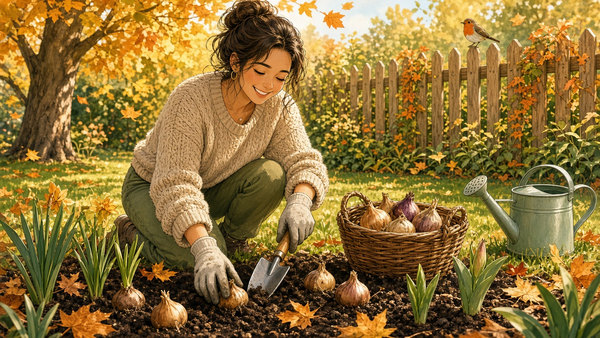
October can feel like the end of the gardening year. The beds are fading, the lawn is covered in leaves and the evenings arrive early. Yet this is exactly the moment when next spring is decided. Tulips, daffodils, crocuses and grape hyacinths all need a long, cool rest in the soil before they flower, and mid-autumn is the sweet spot for putting them in the ground.
The good news: planting bulbs is one of the most forgiving jobs in the garden. You dig, you drop, you cover, and then you forget about them until colour suddenly appears in March.
Which bulbs should you plant first?
Not every bulb likes the same timing. Daffodils and other narcissi prefer to go in early, ideally before the end of October, because they start growing roots quickly. Crocuses, snowdrops and grape hyacinths are small and easy and can be tucked in now as well. Tulips are the exception: they are happiest when planted a little later, once the soil has cooled, which helps protect them from fungal diseases. In most temperate regions that means late October to November.
When buying, squeeze the bulbs gently. They should feel firm and heavy for their size, like a good onion. Soft, mouldy or shrivelled bulbs rarely recover, so leave them in the shop.
The simple planting rule
The classic guideline is easy to remember: plant each bulb at a depth of about two to three times its own height, with the pointed end facing up. If you cannot tell which end is the top, plant it on its side. The shoot will find its way.
- Drainage matters most. Bulbs dislike sitting in wet, heavy soil. If your ground is clay, mix in some grit or compost, or plant in raised beds and containers.
- Plant in groups. A single row of tulips looks lonely. Clusters of seven, nine or more bulbs give a natural, generous effect.
- Think in layers. In pots you can stack bulbs like a lasagne: tulips at the bottom, daffodils in the middle, crocuses on top. They flower one after another for weeks.
Protecting your work
Squirrels and mice find freshly dug soil irresistible. A piece of chicken wire laid flat over the planting area and covered with a little earth keeps them out, and the shoots grow through it without trouble. Daffodils are naturally ignored by most rodents, so mixing them in is an easy trick.
After planting, water once if the soil is dry, then let the weather take over. A light layer of fallen leaves or compost on top acts as a blanket for the winter.
Perhaps the nicest part is the gift you are giving your future self. On a grey day in February, when the first green tips push through the soil, you will remember this golden October afternoon with mud on your gloves and be very glad you took an hour for it.