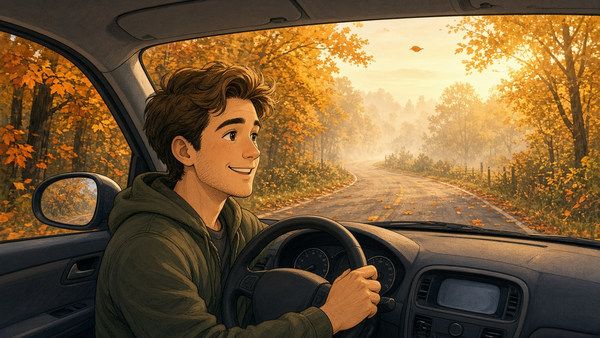
Mid-October is when the roads quietly change character. The trees are at their most beautiful, yet the same golden leaves that look so lovely from the window can turn a familiar route into something slippery. Mornings start in fog, evenings end in early dusk, and the sun sits so low that it can blind you just as you crest a hill. None of this needs to be stressful. A few small adjustments make autumn driving calm and safe.
Why do wet leaves catch so many drivers by surprise?
A layer of damp leaves behaves a little like a thin film of ice. Your tyres press down on the leaves rather than on the asphalt, so grip drops noticeably, especially in corners, at junctions and on downhill stretches under trees. The trick is to read the road early. Wherever you see a carpet of leaves, ease off the accelerator before you reach it, brake gently while you are still driving straight, and avoid sudden steering. Leave a bigger gap to the car in front than you would in summer, because your stopping distance quietly grows.
Cyclists know this well, by the way. Give them extra room on leafy lanes: they may need to wobble around a slick patch without warning.
Fog: slow down and be seen
Autumn fog often lies in valleys and near rivers, then lifts as the morning warms up. When visibility drops, switch on your dipped headlights, not just daytime running lights, because those often leave the rear of the car dark. Rear fog lights are only meant for really thick fog and should go off again once you can see further, otherwise they dazzle the driver behind you. Keep your speed to a level where you could stop within the distance you can actually see, and resist the urge to follow the tail lights ahead too closely.
The low sun problem
Around commuting hours the sun is now low on the horizon, and a dirty windscreen turns that glare into a bright, milky wall. Clean the inside of the glass, where a greasy film builds up from heating and breathing, and top up the washer fluid with a winter-ready mix. Keep a pair of sunglasses within reach and use the sun visor early. If you are suddenly blinded, slow down smoothly instead of braking hard.
A five-minute weekend check
Before the colder weeks set in, take a short walk around your car:
- Lights: check headlights, brake lights and indicators, ideally with a friend standing behind the car.
- Wipers: streaky or juddering blades are cheap to replace and make a huge difference in rain and spray.
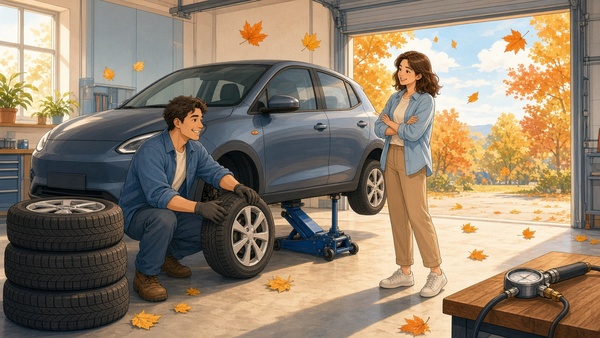
- Tyres: look at tread depth and pressure; colder air lowers pressure, so check it again after the first chilly nights.
- Battery: if the engine already sounds sluggish on cool mornings, have it tested before winter.
Autumn is a wonderful season to be on the road, with forests glowing and quiet early drives through the mist. Give yourself a little more time, a little more distance and a clear view, and you can enjoy every colourful kilometre.