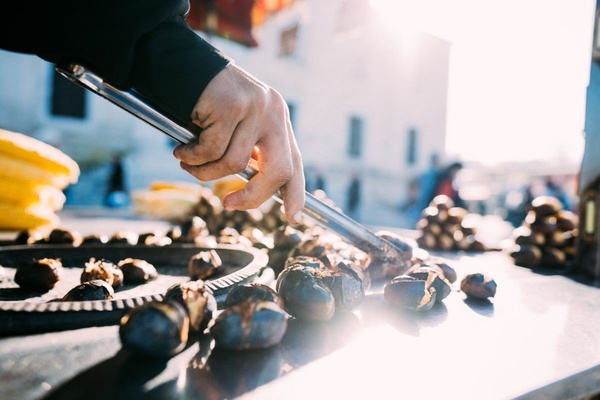
Walk through almost any European city centre this week and you will smell it before you see it: the sweet, smoky scent of chestnuts roasting on a street vendor’s drum. Late October is the heart of chestnut season. The nuts have dropped from the trees, the markets are full of glossy brown shells, and a paper cone of hot chestnuts has become one of the simplest pleasures of the colder months.
The good news is that you do not need a market stall to enjoy them. Roasting chestnuts at home is easy, cheap and surprisingly satisfying, and once you know a few tricks you will wonder why you ever bought the vacuum-packed kind.
How do you pick good chestnuts?
Start at the shop or market. Fresh sweet chestnuts should feel heavy for their size, with tight, shiny shells and no tiny holes, which can mean a worm got there first. Give one a gentle squeeze: if the shell gives way or rattles, the nut inside has dried out. Avoid any with mould near the pale tuft at the top. Buy only what you plan to use within a week and keep them in a paper bag in the fridge, where they stay sweet and moist.
Remember that the edible sweet chestnut is not the same as the horse chestnut, the shiny “conker” that children collect in parks. Conkers are not edible, so if you forage, make sure you know the difference: sweet chestnuts grow in spiky, hairy husks and usually have a small pointed tip.
Roasting them at home
The one step you must not skip is scoring. Lay each chestnut flat side down and cut a cross or a single long slit through the shell with a sharp knife. This lets steam escape and stops the nuts from bursting in the oven. Many cooks then soak the scored chestnuts in warm water for ten to fifteen minutes, which makes them steam gently from the inside and peel more easily.
Spread them cut side up on a baking tray and roast at around 200 °C for 20 to 25 minutes, until the shells curl open at the cuts and the kernels look golden. Wrap the hot chestnuts in a clean kitchen towel for five minutes. That short rest loosens the thin inner skin, and peeling while they are still warm is much easier than once they have cooled.
No oven to spare? A heavy cast-iron pan on the hob works too. Shake it often and keep a lid on for part of the time to trap a little steam.
More than a street snack
Roasted chestnuts are lovely on their own with a pinch of salt, but they are also a quiet star in the autumn kitchen. Chop them into a mushroom risotto, fold them into stuffing, toss them with Brussels sprouts and a little butter, or blend them into a velvety soup with onion and stock. Sweet cooks purée them with sugar and vanilla for desserts, or simply serve them with a glass of young wine, a tradition in many wine regions at this time of year.
Nutritionally, chestnuts are unusual among nuts. They are low in fat, rich in fibre and complex carbohydrates, and they contain vitamin C, which is rare for a nut. That makes them a filling, comforting snack that will not weigh you down.
So this weekend, pick up a bag at the market, score them, roast them, and invite a few friends over. Few things capture the warm side of autumn better than sharing hot chestnuts on a chilly evening.