
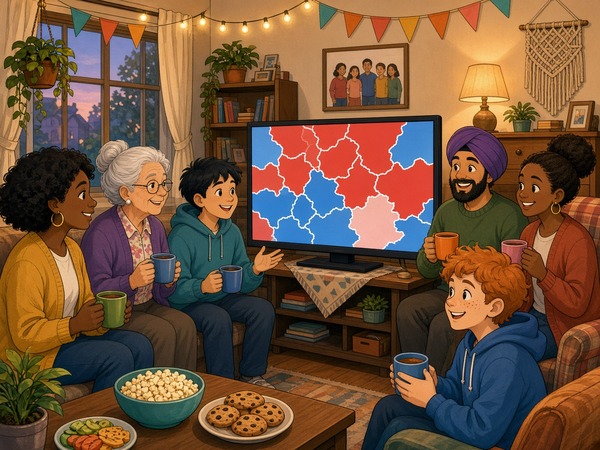
Tomorrow, on Tuesday 3 November, Americans go to the polls for the midterm elections. All 435 seats in the House of Representatives are up for a vote, along with roughly a third of the Senate and a long list of governors, state legislatures and local ballot questions. For many people outside the United States, though, the most confusing part is not the campaign itself but the night that follows. Why do results trickle in for hours, sometimes days? And who actually decides when a race is “called”?
Why does counting take so long?
The United States does not run one national election. It runs thousands of local ones at the same time. Each state sets its own rules, and in most places counties do the actual counting. That means polling hours, ballot designs and counting procedures can differ from one county line to the next.
Mail-in and early ballots add another layer. Some states allow election officials to process these envelopes before Election Day, checking signatures and preparing ballots so they can be counted quickly once polls close. Other states do not permit that work to begin until Election Day itself. In those places, the mail-in pile can take a long time to work through, which is why a race may look very different at midnight than it does two days later.
Ballots that arrive late but were postmarked in time, provisional ballots and overseas military ballots can also be added after election night, depending on state law. None of this is a sign of trouble. It is simply the system working through every valid vote.
Who calls a race?
Here is a detail that surprises many viewers: the race calls you see on television are not official results. They are projections made by news organisations and their decision desks, which combine reported vote totals, exit polls and statistical models. A desk will only call a contest when it is confident that the trailing candidate cannot catch up with the votes still outstanding.
Official results come later, when counties and states complete their canvass and certify the totals. That process takes days or weeks, and close contests may go to a recount under each state’s rules.
Reading the night like a calm observer
A few simple habits make election night far less stressful:
- Watch the share of votes counted, not just the leader. A big early lead means little if only a small part of the expected vote is in.
- Know which votes come first. In some states early ballots are reported first, in others the Election Day vote arrives first. Leads can shift as the other kind is added.
- Be patient with close races. A margin of a few thousand votes may not be settled until every eligible ballot is counted.
- Prefer official sources. State and county election websites publish the real numbers; social media rumours do not.
Midterms usually draw less attention than presidential elections, yet they decide who controls Congress for the next two years and therefore which laws can pass. Whether you follow the night live with a cup of tea or simply check the news on Wednesday morning, understanding how the count works helps you separate genuine news from noise. The final word belongs to the certified results, and those are worth waiting for.