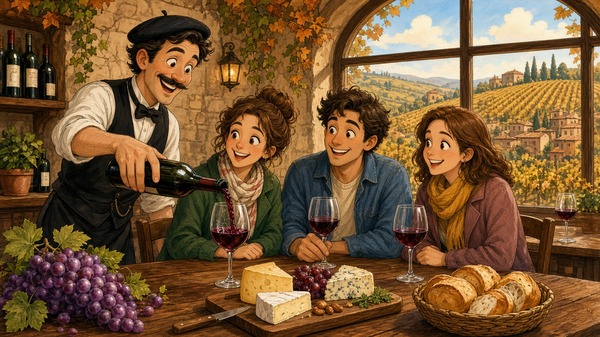
Every year on the third Thursday of November, wine bars from Lyon to Tokyo raise a glass to something unusual: a red wine that was still grapes on the vine only a couple of months earlier. Today, November 19, is that day. Beaujolais Nouveau has arrived, and with it one of the most cheerful rituals in the wine calendar.
For many wine lovers it is the first taste of the new harvest. For others it is simply an excuse to gather with friends on a grey autumn evening. Either way, it is worth knowing what is actually in the glass.
What makes Beaujolais Nouveau so different?
Most red wines spend months or years in tanks, barrels and bottles before they are released. Beaujolais Nouveau takes a shortcut. It is made from the Gamay grape, grown in the Beaujolais region just north of Lyon, and it is produced largely by a technique called carbonic maceration. Whole bunches of grapes are placed in tanks filled with carbon dioxide, and fermentation begins inside the berries themselves before they are pressed.
The result is a wine with soft tannins, bright purple colour and an unmistakably fruity character. Tasters often describe notes of red cherry, raspberry, strawberry and sometimes banana or bubblegum, a typical signature of the method. It is light, juicy and meant to be enjoyed young, ideally within a few months of release.
From local tradition to global event
The idea started as a local custom. Growers and café owners in and around Lyon celebrated the end of harvest with the first wine of the year, drawn straight from the barrel. In the decades after the Second World War, official rules set a release date, and clever marketing turned the occasion into an international race to pour the first bottles. Since 1985 the date has been fixed to the third Thursday of November, which is why the release always falls in the same week but on a different calendar day.
Today the wine is shipped across Europe, North America and Asia, and Japan in particular has become one of its most enthusiastic markets. Thanks to the time zones, Japanese fans are often among the very first to open a bottle.
How to enjoy it
Beaujolais Nouveau is not a wine for long contemplation or decades of cellaring. It shines when kept simple:
- Serve it slightly chilled. Around 12 to 14 degrees Celsius brings out the fresh fruit. Twenty minutes in the fridge is usually enough.
- Pair it with relaxed food. Charcuterie, roast chicken, mild cheeses, a hearty salad or even a turkey dinner work well, since the low tannins do not overpower dishes.
- Drink it soon. The appeal lies in its youthful freshness, so it is best opened by spring.
If you enjoy the style, it is worth exploring the region further. The ten Beaujolais crus, such as Morgon, Fleurie and Moulin-à-Vent, are also made from Gamay but offer more depth and can age gracefully for several years.
A celebration of the season
Critics sometimes dismiss Beaujolais Nouveau as a marketing gimmick, and it is true that it will never compete with the great wines of Burgundy or Bordeaux. But that misses the point. It is a wine about timing and togetherness: a reminder that the harvest is done, the year is turning, and there is still something to celebrate as the days grow shorter.
So tonight, if you spot the familiar announcement in a wine shop window, pick up a bottle, invite a few friends and toast the new vintage. Santé!