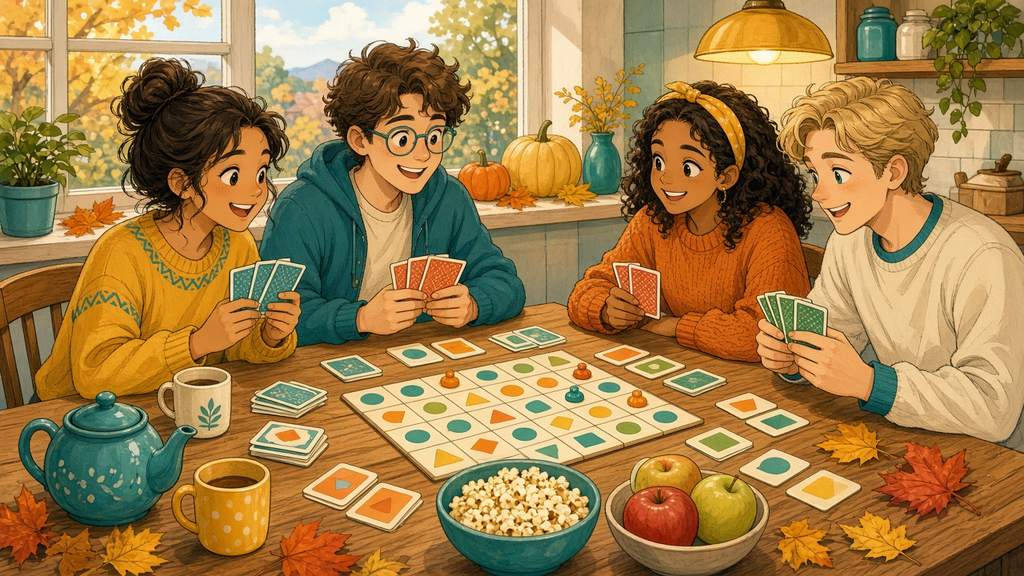

When the evenings draw in and the first cold rain taps on the window, something pleasant happens in many homes: the board game shelf gets dusted off. Autumn is traditionally the high season for tabletop games. Publishers time many of their new releases for the months before the holidays, and after a summer spent outdoors, people are simply ready to gather around a table again. A good game night costs little, needs no screens and gives friends and families a reason to laugh together for a few hours.
Here is how to host one that everyone will want to repeat.
Choose the right game for the right crowd
The most common mistake is bringing out a heavy strategy game for a group that just wants to chat. Match the game to the mood:
- Mixed groups and newcomers: quick party and word games with rules you can explain in two minutes. Cooperative games, where everyone plays together against the game, are great for avoiding sore losers.
- Families with children: games with short turns, colourful pieces and a bit of luck, so younger players have a real chance.
- Experienced players: a longer strategy game works best when everyone knows in advance and has set aside the whole evening.
If you are unsure, start with something light as a warm-up and keep a bigger game in reserve.
Learn the rules before your guests arrive
Nothing drains energy faster than twenty minutes of reading a rulebook aloud. Play a practice round alone or watch a short tutorial video beforehand. Then explain the goal first, the basic turn second and the special cases only when they come up. Most people learn best by playing.
Snacks, light and comfort
Finger food that does not leave greasy hands is your friend: popcorn, pretzels, grapes, small sandwiches or a tray of vegetables with dip. Keep drinks on a side table so cards stay dry. Good lighting over the table matters more than you think, and a few cushions make a long session much more comfortable.
Keep it friendly
The point of a game night is the company, not the scoreboard. Agree on house rules before you start, let beginners ask questions freely and celebrate clever moves no matter who makes them. Rotating who picks the next game keeps everyone involved, and short breaks between rounds give people time to talk.
Make it a tradition
Many groups find that a fixed date, such as the first Saturday of every month, makes it far easier to keep meeting. Some take turns hosting, others build a small shared collection over time. Libraries and local game cafés often lend or rent out games too, which is a perfect way to try new titles before buying.
So put the kettle on, set out the dice and invite a few friends. A rainy autumn evening rarely feels as warm as it does around a full game table.